

Martial Arts or Team Sports for Your Child?
- GMA Professor Konrado
- 11 minutes ago
- 6 min read
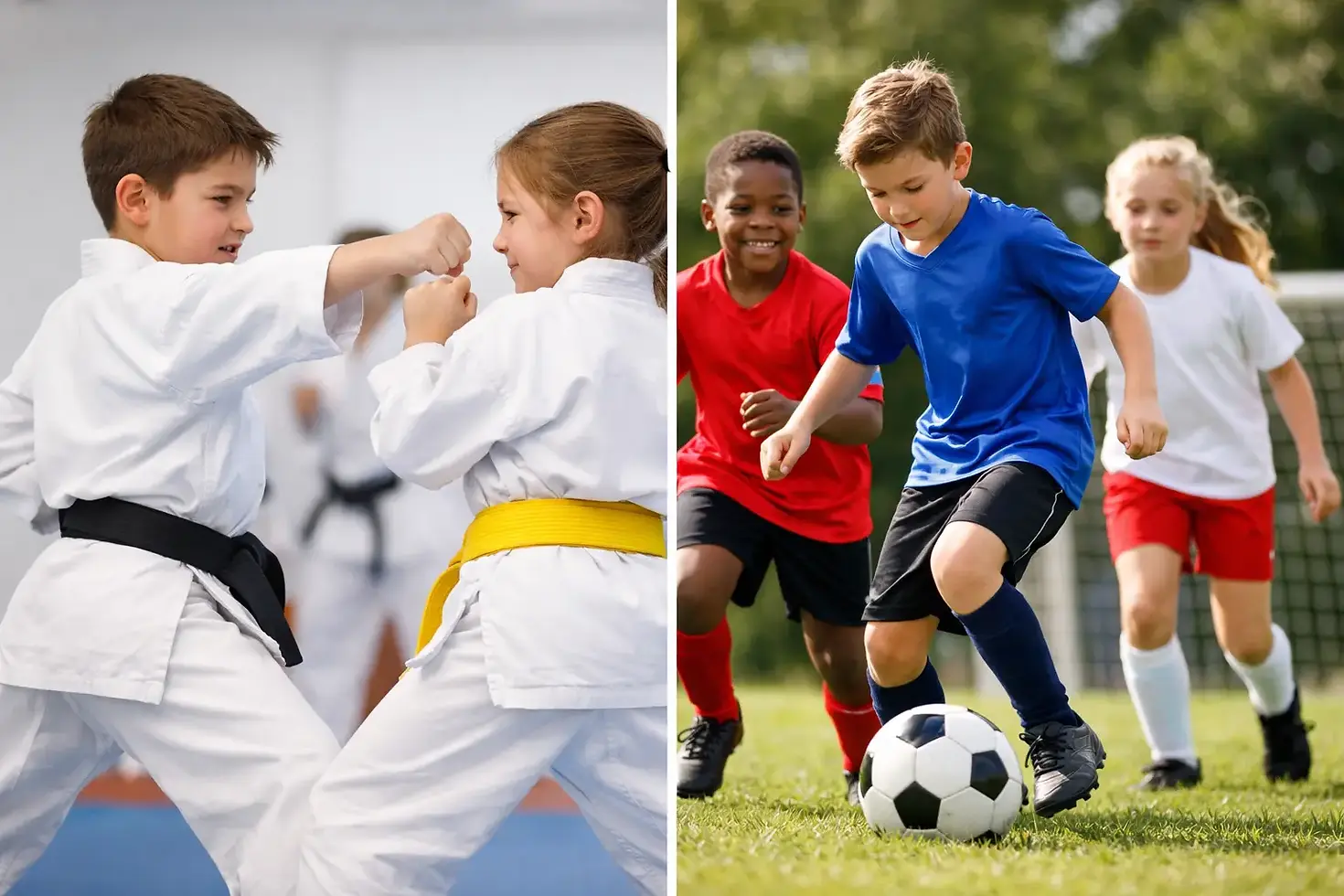
A child comes home energized after soccer practice, but hesitates when it is time to try out next season. Another child says they want to feel stronger, more confident, and less worried about being picked on. When parents consider martial arts or team sports, the right choice is rarely about which activity is "best" in every situation. It is about finding the setting where your child can grow, stay engaged, and feel supported.
Team sports can teach cooperation, resilience, and shared responsibility. Martial arts build physical ability too, while placing special attention on self-control, individual progress, respect, and practical personal safety. Both can be valuable. The better fit depends on your child’s personality, needs, schedule, and goals.
Martial Arts or Team Sports: What Does Your Child Need?
Start with what your child needs right now, not what worked for a sibling or what other families are choosing. A highly social child who loves the energy of a game may thrive on a baseball, football, or basketball team. A child who is uncomfortable in large groups, worries about making mistakes in front of peers, or wants more personal direction may find martial arts more welcoming.
Traditional martial arts classes give every student a role. There is no bench, no waiting for a coach to decide who gets playing time, and no need to be the fastest child to make progress. Each student practices, receives instruction, and works toward the next skill level at an appropriate pace. That consistency can be especially meaningful for children who need confidence before they are ready to perform in a competitive group setting.
Team sports also have a major strength: they teach children to work toward a common goal. Players learn that their effort affects others, how to communicate under pressure, and how to handle wins and losses together. For many children, the friendships built through a season are a powerful reason to keep participating.
The question is not whether one activity teaches character and the other does not. It is where your child is most likely to practice character week after week.
Individual Progress Can Build Lasting Confidence
In martial arts, students measure progress against their own previous effort. A child who could not hold a balanced stance, follow a sequence, or speak with confidence at the beginning of class can see those changes over time. Stripes, belts, and skill milestones give effort a visible direction, but the deeper lesson is that improvement comes from showing up, listening, and trying again.
That message matters for children who compare themselves harshly with others. In a healthy martial arts school, a beginner can train beside a more experienced student without being made to feel behind. The advanced student becomes an example of what patient practice can create, not a reason to quit.
This does not mean martial arts avoid challenge. Students learn to accept correction, work through frustration, and stay composed when a drill is difficult. Brazilian Jiu-Jitsu, karate, Taekwondo, Hapkido, and other traditional disciplines all require focus and perseverance. The difference is that success is not reserved for the child who scores the most points or gets selected for the starting lineup.
For some children, that individual path is exactly what helps them become more willing to join group activities later. Confidence built on the mat often carries into school presentations, friendships, and team environments.
Fitness Is Different From Competition
Parents often choose sports because they want their child moving more, sleeping better, and spending less time on a screen. That is a strong reason to enroll in any active program. Both martial arts and team sports can improve coordination, endurance, flexibility, balance, and overall fitness.
The difference is how activity is delivered. In many team practices, children may spend part of the session waiting for a turn, listening to strategy, or standing in a line. That is normal and necessary for the sport. Martial arts classes generally keep students active through structured drills, movement, technique practice, and conditioning suited to their age and ability.
Martial arts also develop body awareness. Children learn how to fall safely, keep their hands up, maintain distance, control their movement, and use technique rather than wild force. These are useful skills for sports, play, and everyday life.
Competition can be motivating for the right child, but it should not be the only source of motivation. A good program helps children enjoy learning even when no trophy, scoreboard, or tournament is involved.
Self-Defense Is a Meaningful Difference
A team sport teaches skills connected to that sport. Martial arts can offer something more directly practical: age-appropriate self-defense awareness. Children learn to use a confident voice, respect personal boundaries, recognize unsafe situations, and seek help from trusted adults.
Physical techniques matter, particularly in Brazilian Jiu-Jitsu and self-defense training, but responsible instruction is never about teaching children to start fights. The goal is the opposite. Students learn self-control, de-escalation, and the responsibility that comes with having skills. They are taught that the strongest choice is often to avoid trouble, leave when possible, and get an adult involved.
For parents concerned about bullying, this approach can be reassuring. A child who stands taller, makes eye contact, and knows they have support may become less likely to be seen as an easy target. Just as important, martial arts training gives them a constructive place to talk about respect and appropriate responses.
Safety Depends on the Program, Not the Category
Some parents worry that martial arts are too physical. Others worry about collisions, hard throws, and overuse injuries in team sports. Every physical activity carries some risk, which is why the quality of supervision matters more than the label on the activity.
Look for instructors who teach control before intensity, group students by age and skill when needed, and make safety expectations clear. Children should not be pushed into contact drills they are unprepared for. They should learn how to work with training partners, follow rules, and communicate when something does not feel right.
The same principle applies to youth sports. A strong coach builds skills progressively, respects recovery, and treats every child with dignity. A poor environment, whether it is a field, court, or martial arts school, can make a child anxious and discourage participation.
At Academia Rocian Gracie Jr. Brazilian Jiu-Jitsu USA TN Branch, families should expect structured instruction, a bully-free culture, and an environment where respect is part of every class. For parents, it is reasonable to ask about staff screening, class supervision, student-to-instructor attention, and how a school handles unsafe or disrespectful behavior.
Schedule and Commitment Matter More Than Parents Expect
Team sports often run in seasons, with changing practice schedules, games on weekends, travel, and occasional weather cancellations. Some families enjoy that rhythm. Others find it difficult to balance with schoolwork, family time, church, or other commitments.
Martial arts commonly offer more consistent year-round training and multiple class times. That can make it easier for a child to build a routine. Missing one class does not necessarily mean missing the game or letting down a whole team. Students can return and continue developing their skills.
Neither schedule is automatically easier. A family that loves game days and team traditions may gladly make room for a busy season. A family looking for steady training and fewer weekend obligations may prefer martial arts. Be honest about the routine you can maintain, because consistency is where the benefits begin.
It Does Not Have to Be One or the Other
Many children do well in both martial arts and team sports. Martial arts can improve balance, coordination, focus, and confidence that carry over to the field or court. Team sports can give martial arts students another opportunity to practice communication and cooperation.
The challenge is avoiding overscheduling. A child who is exhausted, stressed, or never has time to play freely may lose the joy that activities are meant to create. One committed activity is better than three that leave the entire family overwhelmed.
If your child wants to try both, begin with a manageable schedule and listen closely. Are they excited to go? Do they feel safe and included? Are they learning to handle hard moments without feeling crushed by them? Their answers tell you more than any activity label can.
A good first step is to let your child experience a class before making a long-term decision. Watch how instructors speak to beginners, how older students treat younger ones, and whether your child leaves feeling capable. The right program should challenge your child while reminding them that they belong.


Comments